As Bhutan observes the International Day of Older Persons on 1 October, attention is turning towards a demographic change that could shape the country’s health and social systems for decades: more Bhutanese are expected to live into older age, making healthy ageing an increasingly important national priority.
The Ministry of Health, in its message marking the day, has encouraged greater attention to the wellbeing, needs and rights of older persons and recognised their continuing contribution to families, communities and society. Bhutan observes October as Older Persons’ Month, creating a month-long opportunity to strengthen awareness and support for dignified ageing.
This year’s international theme, “Age of Longevity: Rethinking Systems for Longer Lives,” places the emphasis not simply on living longer, but on ensuring that additional years are supported by good health, independence and a sense of purpose.
The demographic numbers show why that shift matters. According to the National Statistics Bureau’s population projections, people aged 60 and above accounted for 9.6 percent of Bhutan’s population in 2022. By 2047, that proportion is projected to rise to 19.7 percent. The share of people aged 65 and above is also projected to increase from 6.6 percent in 2022 to 13.4 percent in 2047.
The figures suggest that Bhutan has an opportunity to prepare before demographic change places greater pressure on families and public services.
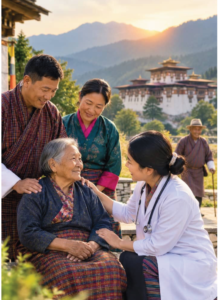
The government has already taken steps in that direction. The National Policy for Senior Citizens was launched in 2023, providing a policy framework intended to improve the livelihoods and wellbeing of senior citizens and strengthen support systems. The Royal Society for Senior Citizens said the policy was developed through collaboration involving the government, the Ministry of Health and other stakeholders.
Health prevention is another important part of the response. In its message for International Day of Older Persons, the Ministry of Health has encouraged older people to visit their nearest health facility for health screening. Regular screening and early identification of health concerns can support timely intervention and follow-up.
Bhutan’s health system is also placing greater emphasis on prevention and care across the life course. The Ministry’s Non-Communicable Disease Division identifies screening, health education, healthy-lifestyle promotion and early detection among its approaches to tackling conditions such as cardiovascular disease, diabetes, hypertension and chronic respiratory illnesses. Its responsibilities also include comprehensive healthcare for elderly people.
For older citizens, such preventive measures can have a direct practical benefit. Identifying health concerns earlier can create opportunities for treatment and follow-up before conditions become more difficult to manage. It can also give families and caregivers better information about the support an older person may need.
But healthy ageing cannot be achieved by hospitals and health workers alone. The Ministry has emphasised that families, communities, health workers and institutions all have a role in ensuring older people remain valued, included and supported.
This broader approach could become increasingly important as Bhutan’s population ages. Communities can support older people through social participation, safer living environments and stronger connections between generations. Families can help by encouraging preventive healthcare and maintaining social contact, while institutions can consider whether services are accessible and responsive to older citizens.
The need to prepare for longer lives also extends to assistive support. The World Health Organization notes that assistive technology can improve functioning, independence, safety and participation among older people, including helping them remain at home for longer. Such support can benefit individuals and families while contributing to wider social and economic participation.
For Bhutan, preparing for an ageing population therefore offers benefits that reach beyond healthcare. A healthier older population can remain active in families and communities for longer, while stronger support systems can help reduce some of the responsibilities that may otherwise fall heavily on individual families.
Older citizens also carry experience, knowledge and memories that connect generations. Creating conditions in which they can continue participating in community life can help preserve social relationships while giving younger generations opportunities to learn from them.
The projected rise in Bhutan’s older population makes preparation today particularly significant. Planning for accessible healthcare, preventive screening, community-based support, social protection and age-friendly services can help the country respond to future needs rather than waiting until those needs become more difficult to address.
The observance of International Day of Older Persons can therefore serve as a reminder that ageing is not only an issue for today’s senior citizens. It is a stage of life that every generation may eventually experience.
For Bhutan, the challenge and opportunity are closely connected: longer lives can become healthier, more independent and more fulfilling lives when individuals, families, communities and institutions prepare together.