As Gelephu prepared for the raising of 108 Jangchub Chortens on November 1, Bhutanese journalists spent three days examining how the ceremony connected with the town’s wider transformation.
The familiarisation programme, held from October 5 to 7, was organised by the Gelephu Mindfulness City Authority (GMCA).
Rather than focusing only on the upcoming religious event, the visit introduced journalists to the broader development plans taking shape under Gelephu Mindfulness City (GMC).
During the visit, officials described Project 108 as both a spiritual undertaking and an important part of Gelephu’s emerging identity. They said the chortens would serve as symbols of peace, compassion and collective aspiration, while also forming part of the wider vision for a city rooted in Bhutanese values.
The programme included visits to important sites and development areas, allowing participants to observe the progress and challenges associated with Project 108. Journalists saw preparations connected to the chortens and visited locations identified for future development. The field visits provided a more direct view of the scale of the proposed changes than could be gained from official presentations alone.
Journalists also explored the spiritual meaning of the chortens and their place in Bhutan’s cultural and religious traditions. Religious and local perspectives emphasised that the ceremony should not be understood simply as a construction project or public spectacle. For many residents, the chortens represent blessings for the community and a continuation of Bhutan’s longstanding tradition of linking development with spiritual purpose.
At the same time, conversations with residents reflected a mixture of hope and uncertainty. Some welcomed the prospect of better roads, new services, employment and business opportunities. Others said the pace of change made it important to clarify how land, compensation, relocation and access to future jobs would be managed. Several residents stressed that local people should not become spectators in the development of their own town.
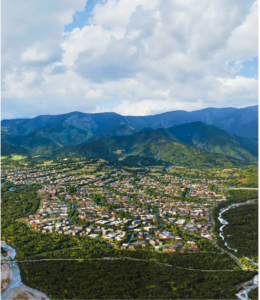
The visit came at a time when Gelephu is entering a period of significant change. GMC’s plans are expected to influence infrastructure, investment, employment and the daily lives of residents. Officials presented the city as a long-term project intended to attract investment while preserving Bhutan’s cultural character and environmental values. Journalists, however, also noted the need for clear information about timelines, implementation and the practical effects on communities.
The programme encouraged closer examination of the opportunities and concerns linked to Gelephu’s growth. While the development initiative promises new economic possibilities, it also raises questions about land, livelihoods, cultural preservation and the need to ensure that local people remain central to the city’s future. Residents and journalists alike pointed to the importance of regular consultation and transparent communication as the plans move forward.
For the visiting media, the three days offered an opportunity to move beyond official descriptions and observe Gelephu’s changing landscape directly. Journalists compared the authority’s vision with what they saw on the ground and with the views of people living in areas likely to be affected. Their observations suggested that the success of GMC will depend not only on major infrastructure or investment, but also on whether residents feel informed, included and able to benefit.
Through the field visits, the media gained first-hand information to support more informed reporting on Project 108 and GMC. The programme highlighted that the November ceremony is not an isolated event, but part of a larger effort to shape Gelephu as a centre combining spirituality, sustainability and economic development.
As preparations continue for the chorten-raising ceremony, the journalists’ visit is expected to contribute to wider public understanding of both the religious significance of Project 108 and the changes unfolding across Gelephu. It also underscored the questions that will continue to accompany the city’s transformation: how development will be balanced with tradition, how local concerns will be addressed, and how Gelephu’s residents will participate in defining its future.