Bhutan is hosting a regional dialogue to explore how governments can better anticipate emerging challenges, adapt policies and strengthen public service delivery as countries face growing uncertainty from climate change, technological disruption and shifting economic and social conditions.
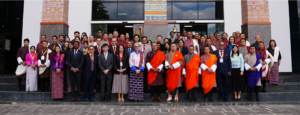
The two-day strategic dialogue, titled Governing through Change: Future-Ready Governance in Asia and the Pacific, opened in Thimphu on October 8, bringing together more than 100 government leaders, policymakers and governance experts from Bhutan, India, Samoa, Singapore, Sri Lanka, Thailand and Viet Nam.
Opening the dialogue, Prime Minister Dasho Tshering Tobgay said Bhutan’s transition to democracy demonstrated the importance of preparing for change before a crisis emerges.
He said Bhutan’s democratic transition was driven by anticipation rather than crisis, describing it as an example of future-ready governance. He also highlighted Gelephu Mindfulness City as part of the country’s effort to shape its economic future.
The Prime Minister said Bhutan’s Kings had prepared the country for a political future nearly two decades ago, while His Majesty The King’s Diamond Strategy was setting a new direction for the country’s development.
He emphasised that anticipating change, adapting to new circumstances and acting decisively were essential capabilities for all countries, particularly smaller nations such as Bhutan.
The dialogue is convened by the Prime Minister’s Office, the United Nations Development Programme (UNDP) and the Chandler Governance Group. It aims to examine how governments can strengthen institutions, use technology and partnerships, and make public services more responsive to changing needs.
Governments traditionally designed to maintain stability are increasingly confronted with overlapping challenges, including climate pressures, demographic shifts, emerging technologies, fragmented trade and declining public trust.
Caitlin Wiesen, UNDP Resident Representative ad interim, said the consequences of these risks were already visible across the region. At the current pace, Asia and the Pacific is projected to miss 103 of the 117 measurable Sustainable Development Goal targets by 2030, she said.
The challenge, she noted, was to ensure governments remained effective in an environment where change had become constant.
UNDP is supporting countries to strengthen their capacity to anticipate risks, plan ahead, use evidence to inform decisions, test new approaches and improve coordination across government agencies. Its work includes policy innovation labs in Bhutan, Sri Lanka and Thailand, foresight initiatives across countries from Cambodia to Fiji, stronger government coordination in Nepal and digital tools to improve public services.
Wu Wei Neng, Chief Executive Officer of the Chandler Governance Group, said governments had become more aware of the importance of preparing for the future over the past two decades, although translating that understanding into effective action remained a challenge.
He noted that scenario planning and foresight capabilities, which were less familiar to many governments in the early 2000s, were now being adopted by more countries. However, he said further work was needed to ensure governments could effectively prepare for and respond to future changes.
To support these efforts, UNDP and the Chandler Governance Group are developing the Asia-Pacific Future-Ready Governance Index, in collaboration with an international group of experts and participating pilot countries.
The index will assess government capabilities across three areas: anticipating change, adapting policies and acting quickly. It will examine practical capacities such as identifying risks, undertaking long-term planning, coordinating across government, testing new ideas, mobilising resources and using digital tools to improve services.
The proposed index is intended to help governments identify institutional strengths and weaknesses, determine gaps in their governance systems, set reform priorities and monitor progress over time.
An Expert Reference Group comprising academics, international partners and senior practitioners will review the index and test its approach to ensure the findings are credible and useful to participating countries.
UNDP plans to pilot the index in selected countries during 2026 and 2027. The findings will be linked to national reform priorities and country-level support through UNDP’s Project Vision initiative.
The index is expected to provide governments with a clearer evidence base for assessing their readiness for change. By identifying what works and where improvements are needed, it could help countries move away from fragmented, reactive reforms towards more coordinated and forward-looking governance.
It is also intended to support governments in learning from one another and enable more informed discussions with civil society and development partners on strengthening public institutions.
The regional dialogue provides a platform for participating countries to exchange experiences and explore practical approaches to building governments that can respond effectively to emerging challenges while maintaining public trust and delivering accessible, responsive services.