Home Blog

Beyond the Chortens: Journalists Explore Gelephu’s Emerging Future

0

As Gelephu prepared for the raising of 108 Jangchub Chortens on November 1, Bhutanese journalists spent three days examining how the ceremony connected with the town’s wider transformation.

The familiarisation programme, held from October 5 to 7, was organised by the Gelephu Mindfulness City Authority (GMCA).

Rather than focusing only on the upcoming religious event, the visit introduced journalists to the broader development plans taking shape under Gelephu Mindfulness City (GMC).
During the visit, officials described Project 108 as both a spiritual undertaking and an important part of Gelephu’s emerging identity. They said the chortens would serve as symbols of peace, compassion and collective aspiration, while also forming part of the wider vision for a city rooted in Bhutanese values.

The programme included visits to important sites and development areas, allowing participants to observe the progress and challenges associated with Project 108. Journalists saw preparations connected to the chortens and visited locations identified for future development. The field visits provided a more direct view of the scale of the proposed changes than could be gained from official presentations alone.
Journalists also explored the spiritual meaning of the chortens and their place in Bhutan’s cultural and religious traditions. Religious and local perspectives emphasised that the ceremony should not be understood simply as a construction project or public spectacle. For many residents, the chortens represent blessings for the community and a continuation of Bhutan’s longstanding tradition of linking development with spiritual purpose.
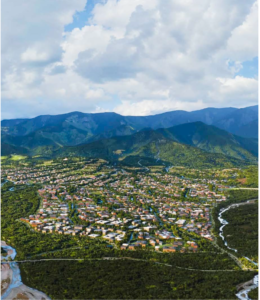
At the same time, conversations with residents reflected a mixture of hope and uncertainty. Some welcomed the prospect of better roads, new services, employment and business opportunities. Others said the pace of change made it important to clarify how land, compensation, relocation and access to future jobs would be managed. Several residents stressed that local people should not become spectators in the development of their own town.
The visit came at a time when Gelephu is entering a period of significant change. GMC’s plans are expected to influence infrastructure, investment, employment and the daily lives of residents. Officials presented the city as a long-term project intended to attract investment while preserving Bhutan’s cultural character and environmental values. Journalists, however, also noted the need for clear information about timelines, implementation and the practical effects on communities.

The programme encouraged closer examination of the opportunities and concerns linked to Gelephu’s growth. While the development initiative promises new economic possibilities, it also raises questions about land, livelihoods, cultural preservation and the need to ensure that local people remain central to the city’s future. Residents and journalists alike pointed to the importance of regular consultation and transparent communication as the plans move forward.

For the visiting media, the three days offered an opportunity to move beyond official descriptions and observe Gelephu’s changing landscape directly. Journalists compared the authority’s vision with what they saw on the ground and with the views of people living in areas likely to be affected. Their observations suggested that the success of GMC will depend not only on major infrastructure or investment, but also on whether residents feel informed, included and able to benefit.

Through the field visits, the media gained first-hand information to support more informed reporting on Project 108 and GMC. The programme highlighted that the November ceremony is not an isolated event, but part of a larger effort to shape Gelephu as a centre combining spirituality, sustainability and economic development.
As preparations continue for the chorten-raising ceremony, the journalists’ visit is expected to contribute to wider public understanding of both the religious significance of Project 108 and the changes unfolding across Gelephu. It also underscored the questions that will continue to accompany the city’s transformation: how development will be balanced with tradition, how local concerns will be addressed, and how Gelephu’s residents will participate in defining its future.

Mental health problems among older people often overlooked

0

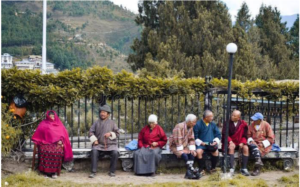
Mental health conditions among older people in Bhutan often go unrecognized because symptoms such as memory loss, behavioral changes and sleep disturbances are dismissed as normal ageing, psychiatrists warned at the fourth PEMA Symposium in Thimphu, calling for greater awareness and stronger support as the country’s elderly population is projected to reach 118,650 by 2047.

Memory loss, changes in behavior and sleep disturbances among older people are often dismissed as signs of ageing, leaving many mental health conditions unrecognized and untreated. As Bhutan’s population grows older, psychiatrists are calling for greater awareness and stronger support systems to ensure older people receive timely care.
The issue was discussed at the fourth PEMA Symposium in Thimphu, where experts highlighted the challenges older people face in accessing mental health services.

Mental health support often focuses on younger people, while problems affecting older people may go unnoticed until their conditions become more serious. Psychiatrists say symptoms such as forgetfulness, irritability, changes in appetite, disturbed sleep and unexplained physical complaints can sometimes indicate underlying mental health conditions rather than simply being a consequence of growing old.
However, families and communities may overlook these signs, assuming that such changes are inevitable with age. This can delay diagnosis and prevent older people from receiving the treatment and support they need.
Experts describe this tendency as ageism, a form of discrimination in which people are treated differently because of their age. It can influence how older people perceive their own health problems and how society, institutions and governments respond to their needs.

Dr Palanimuthu Thangaraju Sivakumar, a geriatric psychiatrist with the National Institute of Mental Health and Neurosciences in India, said age-related assumptions could become a barrier to accessing care.
“It is one of the biases which can actually prevent care for older people. The bias can be within themselves or by others, whether it’s the government or society. So, anything that is happening to an older adult, something like a health problem or a mental health problem, they may attribute that to normal ageing,” he said.
The concern is particularly relevant for Bhutan as the country undergoes demographic changes. The number of people aged 65 and above is projected to increase from nearly 30,000 in 2005 to 118,650 by 2047.
Health officials recorded 6,449 cases of anxiety and depression among older patients in 2023. While the figures indicate that mental health concerns already affect older people, experts say awareness remains a challenge, particularly at the community level.

In some communities, changes in behavior and memory are still commonly understood as part of the ageing process rather than possible symptoms requiring medical attention.
Pema Yuden, Gewog Administrative Officer of Norbugang in Samtse, said people sometimes failed to recognize when older individuals needed professional help.
“Even though there are not many who are unconscious, some forget, and they tend to show different behaviors. We have always thought of it as part of ageing,” she said.
Local authorities can help provide shelter and social support to vulnerable older people, but their ability to address medical needs remains limited.

Haa Dzongrab Dorji Gyeltshen said officials work with relevant organisations when older people cannot care for themselves and have no family members to support them.
“If there are individuals who are mentally challenged and who cannot take care of themselves and get sick, we collaborate with RENEW. If he or she does not have anyone to look after them, there is GoenshoTshamkhang in Thimphu. We verify and let them stay there,” he said.

However, Bhutan has yet to establish a dedicated old-age psychiatry service. The PEMA provides occasional mental health support to older people at GoenshoTshamkhang in Thimphu, but experts say more comprehensive services will be needed as the population ages.

Without timely intervention, older people experiencing mental health conditions may continue to suffer without support. Their conditions could worsen, affecting their ability to manage daily activities and live independently.
Experts say the response should extend beyond medical treatment to include social care, community-based support and the use of technology to reach older people who may otherwise remain isolated.

Dr Sivakumar said peer support and intergenerational programmes could help older people maintain social connections and receive support from different age groups. He also suggested establishing an elderly helpline linked to protection services, similar to existing helplines for children.
“Approaches like peer support and intergenerational interventions can be very useful here. Technology can also help, such as helplines. There is a child protection helpline, and similarly, an elderly helpline linked to elderly protection could be very useful. Older people need support for social care, and this will be important for supporting the ageing population,” he said.

Raising public awareness is another important step. Pema Yuden said mental health problems are often associated with younger people, while similar challenges among older people may be overlooked.
“Right now, people tend to think that mental health problems are all related to young people, whereby if they are drinking and smoking, we feel they are dealing with some mental health challenges. But if an older person drinks, smokes and stays like that, no one really understands why. So firstly, we need to understand that old people also have mental health problems,” she said.

Psychiatrist Dr Sonam Wangchuk said responsibility for supporting older people’s mental health should be shared across society, rather than left to healthcare professionals alone.
“Everybody can play a very important role in taking care of the mental health of the ageing population. That includes grassroots-level people like your family members, your local leaders, healthcare centres, NGOs, the Ministry of Health, universities; everyone has a very important role to play,” he said.

Families and neighbors are often among the first to notice changes in an older person’s behaviour or wellbeing. Recognising these changes and encouraging timely medical assessment could help ensure that potential mental health conditions are not dismissed as normal ageing.

Community leaders, healthcare centres, non-governmental organisations, universities and government agencies also have roles in improving awareness, strengthening support networks and helping older people access appropriate services.
As Bhutan prepares for a significantly larger elderly population in the coming decades, experts say recognising mental health problems early will be essential to protecting older people’s wellbeing, dignity and independence.

Bhutan Builds Local Seed Expertise to Strengthen Vegetable Production

0

Regional training in Yusipang focuses on tomato and chilli hybrid seeds, with the aim of improving farmers’ access to quality planting materials and strengthening food security

Bhutan is strengthening its technical capacity in hybrid vegetable seed production, with agricultural researchers receiving specialised training aimed at improving seed quality and reducing reliance on imported supplies.
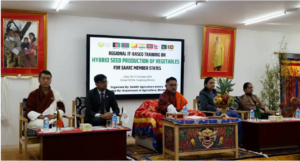
The three-day regional programme, held from 5 to 7 October at the National Centre for Organic Agriculture (NCOA) in Yusipang, brought together researchers and agricultural experts from South Asian Association for Regional Cooperation (SAARC) member states to develop skills in producing hybrid seeds, particularly for tomato and chilli.

The Department of Agriculture under the Ministry of Agriculture and Livestock organised the training in collaboration with the SAARC Agriculture Centre (SAC), Dhaka, Bangladesh. The programme was conducted in a hybrid format, with 30 Bhutanese researchers attending in person and participants from Bangladesh, India, Nepal and Sri Lanka joining virtually.

Agriculture and Livestock Minister Lyonpo Younten Phuntsho inaugurated the programme, which also brought together Tanvir Ahmad Torophder, Director of the SAARC Secretariat in Kathmandu, as the special guest, alongside diplomatic representatives and officials from Bhutan’s agriculture and foreign affairs agencies.
The training focuses on practical techniques that researchers can apply to improve the quality and reliability of hybrid vegetable seeds.

According to the Department of Agriculture’s programme information, the sessions cover parent plant management, emasculation, pollination, genetic purity, seed handling, storage and quality control. Participants also take part in technical lectures, laboratory exercises, field demonstrations and group learning.
These techniques are important in hybrid seed production, where carefully selected parent plants are crossed to combine desirable characteristics. Proper pollination and genetic purity management help maintain the intended qualities of the resulting seeds, while appropriate handling and storage support seed quality.
In a report published on 5 October, Bhutan Broadcasting Service (BBS) quoted Saha Bir Rai, Chief Agriculture Officer with the Department of Agriculture, explaining that Bhutan has basic knowledge and experience in hybrid seed production but needs more advanced technical expertise.

The training seeks to address that gap by strengthening the knowledge of researchers and agricultural professionals who can apply and share their skills through future research and field-level support.
For farmers, access to quality seed is an important starting point for vegetable production. Seeds with suitable characteristics can help farmers establish crops more consistently and improve the quality and uniformity of their produce when combined with appropriate cultivation practices.

The organisers expect stronger regional capacity in hybrid seed production to improve the availability of quality planting materials and help reduce dependence on imported hybrid seeds.
For Bhutan, developing local expertise could also provide greater scope to research varieties suited to the country’s farming conditions. Better coordination between research institutions and agricultural extension services could help transfer improved production techniques to farmers.

These benefits will depend on how the training is followed up. Researchers will need opportunities to apply their knowledge through trials, evaluate seed performance and ensure that suitable planting materials reach farming communities. The programme itself does not establish that seed imports have already declined or that farmers’ incomes and yields have increased.

Vegetables contribute essential vitamins, minerals and dietary fibre to people’s diets. Improving the reliability of vegetable production can therefore support Bhutan’s wider food and nutrition security objectives.
The training also highlights the importance of preparing agriculture for challenges associated with climate variability, pests and diseases. During the inaugural session, Lyonpo Younten Phuntsho emphasised the role of plant breeding, hybrid vigour and quality seed systems in strengthening agricultural productivity and resilience.
He also stressed that investment in research, seed technology and human resources should translate into practical benefits for farmers, including better yields, reduced production risks, improved market opportunities and stronger livelihoods.

Achieving those outcomes requires more than technical training. Continued research, effective quality control, suitable varieties and reliable distribution systems will be essential to ensure farmers can access and use the seeds successfully.

The Yusipang programme creates an opportunity for Bhutanese researchers to learn alongside experts from other SAARC member states and strengthen regional cooperation in agricultural technology.
Its long-term value will depend on whether participants translate the knowledge gained into practical research and support for farmers. By building local expertise in hybrid seed production, Bhutan can work towards a more reliable supply of quality planting materials and strengthen the foundations of vegetable production.
The next step is to carry these techniques from training facilities and demonstration fields into farming communities, where their contribution can be assessed through seed quality, crop performance and farmers’ access to improved planting materials.

OnMyMind Campaign Highlights Need for Earlier Stress Recognition in Bhutanese Youth

0

This Content Is Only For Subscribers

Please subscribe to unlock this content. Enter your email to get access.
Your email address is 100% safe from spam!

Bhutan’s Eye Care Strategy Targets Better Access to Vision Services by 2030

0

Five-year roadmap aims to strengthen early detection, treatment and continuity of eye care, with benefits for students, older people and communities across the country

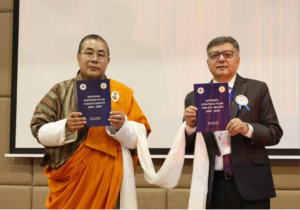
Bhutan has set a new direction for eye health through the launch of its National Eye Care Strategy 2026–2030, placing the focus on how the country can strengthen services, identify vision problems earlier and improve access to treatment over the next five years.

The National Medical Services (NMS), in collaboration with the World Health Organization (WHO), launched the strategy during the World Sight Day observance held from 8 to 10 October 2026. The event brought together the Health Minister, healthcare professionals from facilities across Bhutan, and representatives from WHO, Nepal Netra Jyoti Sangh (NNJS) and the International Agency for the Prevention of Blindness (IAPB).
The strategy is intended to guide the delivery of eye care across the healthcare system. Its practical significance will depend on how effectively national priorities are translated into accessible services, particularly for people who need early assessment, treatment or continued care.

According to WHO’s published account of Bhutan’s eye health planning, the country’s previous eye health strategy expired in 2024, prompting work on a new framework to guide the next phase of service development.
In a notice published on 21 May 2025, WHO said the development of the strategy would draw on the 2018 Rapid Assessment of Avoidable Blindness, a nationwide study of refractive errors among children conducted in 2018, an eye care system assessment undertaken with the Ministry of Health in 2020, and findings from the National Health Survey 2023.

These assessments provide a basis for identifying gaps and setting priorities rather than relying on assumptions about the population’s needs. WHO said the strategy-development process was intended to review available evidence, consult stakeholders, establish priorities and prepare a costed plan for implementation.
The new strategy therefore represents a policy response to the need for sustained planning in eye health. However, the announcement of its launch does not, by itself, establish how many additional people will receive services or how much funding and staffing will be allocated.

The strategy aligns with WHO’s Integrated People-Centred Eye Care framework, which emphasises connecting eye health services with the wider healthcare system.
In practice, this approach can support a more coordinated pathway from identifying a vision problem to receiving an examination, diagnosis, treatment and follow-up. Its success will depend on service availability, trained health workers, equipment, referral arrangements and resources.

For students, timely identification of refractive errors could help address blurred vision that makes reading and classroom activities difficult. Appropriate assessment and access to prescribed spectacles can support learning, although the strategy’s launch announcement does not report new school-screening targets or confirmed benefits already delivered.
For working-age people, timely eye care can help address vision difficulties that affect daily activities and work. Older people may benefit from earlier assessment of conditions such as cataracts, allowing them to seek appropriate treatment before their vision problems become more disabling.
People in remote communities could also benefit if implementation improves access to screening, referrals and treatment closer to where they live. Whether these improvements occur will depend on how services are organised and distributed across the country.
WHO’s World Sight Day statement of 8 October 2026 highlights the continuing global burden of vision impairment. It estimates that 2.2 billion people worldwide live with near or distance vision impairment and says nearly half of these cases could have been addressed through interventions such as surgery or spectacles.
WHO also identifies uncorrected refractive errors and cataracts among the leading causes of vision impairment. These conditions demonstrate why early assessment and access to effective treatment remain important public health priorities.

The organisation’s Integrated People-Centred Eye Care framework promotes the inclusion of eye health in primary healthcare and wider health planning. For Bhutan, aligning national planning with this approach provides a framework for improving coordination and monitoring progress towards better access to services.
The National Eye Care Strategy 2026–2030 establishes a framework for strengthening eye health, but its impact will need to be assessed through implementation and measurable results.
Key indicators for the public will include whether people can access timely eye examinations, whether treatment and prescribed spectacles are available when needed, and whether referral and follow-up services function effectively.
The World Sight Day observance, coordinated globally by IAPB, was held under the theme “Every Story Counts”, highlighting the importance of people’s experiences in shaping attention to eye health.
For Bhutan, the next challenge is to turn the strategy into practical improvements that people can experience in their communities. Progress towards 2030 will ultimately be reflected in the accessibility, quality and continuity of eye care—not simply in the launch of a national plan.

Bhutan’s Fifth UN Peacekeeping Contingent Set for Central African Republic Mission

0

180-member team, including 13 women, to deploy in two groups as Bhutan continues its contribution to international peace and security

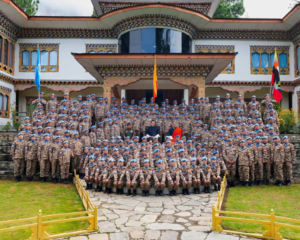
Bhutan’s commitment to international peacekeeping continues as 180 Bhutanese personnel prepare to serve in the Central African Republic (CAR), following an audience with His Majesty The King in Paro on 7 October 2026.
The fifth United Nations Peacekeeping Force (UNPKF) contingent, comprising 13 women, is scheduled to depart Bhutan in two groups on 8 October and 19 October. The deployment marks another phase in Bhutan’s participation in United Nations peacekeeping operations, reflecting the country’s continued engagement in international efforts to promote peace and stability.

The audience with His Majesty comes ahead of the contingent’s departure for an assignment under the United Nations Multidimensional Integrated Stabilization Mission in the Central African Republic (MINUSCA). The mission operates in a country affected by conflict and insecurity, with a mandate that includes protecting civilians and supporting efforts to restore stability.

For Bhutan, the deployment represents more than the movement of personnel overseas. It continues the country’s contribution to collective international security while providing Bhutanese service members with opportunities to gain experience in a multinational operational environment.

Bhutan’s involvement in United Nations peacekeeping began in 2014, when the country started contributing military observers, staff officers and individual police officers to international missions.
According to the Royal Government of Bhutan’s State of the Nation 2022 report, the country expanded its engagement in 2022 by beginning the deployment of 180-member contingents to support MINUSCA in the Central African Republic.

The transition from individual personnel to full contingents marked an important development in Bhutan’s peacekeeping participation. It enabled the country to contribute a larger, coordinated team to an international mission while building on its earlier experience in UN operations.
The fifth contingent continues this engagement, demonstrating Bhutan’s sustained participation in international peacekeeping and its willingness to contribute personnel to missions operating in challenging environments.

Peacekeeping missions expose personnel to security challenges and operational conditions that differ from those encountered in their regular duties at home. Serving alongside personnel from different countries requires effective communication, coordination, discipline and adherence to established international procedures.

Such assignments can help Bhutanese personnel broaden their professional experience, strengthen their understanding of multinational operations and develop skills relevant to leadership and teamwork.
The experience gained abroad may also benefit Bhutan after the personnel return. Sharing operational knowledge and applying lessons learned through training can contribute to professional development and strengthen institutional capacity within the country’s security services.
However, the long-term value of these deployments will depend on how effectively the experience gained during missions is transferred into domestic training and professional practice.
The inclusion of 13 women in the 180-member contingent highlights their participation in Bhutan’s international peacekeeping engagement.

Their deployment provides an opportunity for women to contribute directly to an international security mission alongside their male colleagues. Their participation also forms part of the wider importance of ensuring that qualified personnel can contribute to peacekeeping responsibilities.
For Bhutan, maintaining opportunities for capable personnel to serve in such assignments can support professional development and broaden participation in international service.
The Central African Republic remains the focus of international peacekeeping efforts through MINUSCA, which operates under a United Nations mandate to support peace and security. The mission’s responsibilities include the protection of civilians and support for stabilisation efforts.

By contributing personnel to the mission, Bhutan participates in a collective international effort to address security challenges beyond its borders. The deployment also reflects the role smaller countries can play in multilateral cooperation by providing trained personnel to support shared international responsibilities.
Continued participation in peacekeeping can help Bhutan maintain its engagement with the United Nations while strengthening the experience of its armed forces. It also offers opportunities to reinforce professional standards, develop operational knowledge and build relationships through international cooperation.
As the fifth contingent prepares to leave Bhutan, the deployment marks another step in the country’s peacekeeping journey, which began with individual personnel in 2014 and expanded to full military contingents in 2022.

The contingent’s service in the Central African Republic will contribute to the wider objectives of MINUSCA, while the experience gained may support Bhutan’s future peacekeeping capacity. Its deployment therefore carries significance both for the international mission and for Bhutan’s continuing role in collective efforts to promote peace and stability.

Project 108: Police Estimate Vehicle Numbers as Gelephu Prepares for Major Gathering

0

Preparations for the raising of 108 Jangchub Chortens in Gelephu Mindfulness City (GMC) on November 1 are intensifying, with authorities focusing on traffic management, public transport and safety measures ahead of an expected large gathering of devotees and visitors.
The Royal Bhutan Police (RBP) has estimated that more than 30,000 vehicles could be involved in transporting attendees to Gelephu. However, the figure does not represent actual vehicle registrations, and no separate registration is required for vehicles travelling to the event.
In a clarification requested by the organisers, media houses have been informed that registration applies only to attendees. The vehicle estimates were prepared by the RBP for traffic-planning purposes, based on the number of registered attendees and an assumption that each vehicle would carry an average of three people.
The clarification follows a report by Bhutan Broadcasting Service (BBS) stating that more than 30,000 vehicles had registered to travel to Gelephu, including around 22,000 expected to use Indian highways and more than 9,000 to travel from Thimphu through Tsirang. The figures should instead be understood as estimates of potential vehicle movement derived from attendee registrations.
With preparations continuing for the November 1 ceremony, traffic management remains a major priority for authorities, particularly given the anticipated movement of people from different parts of Bhutan and beyond.


According to the information provided by the RBP for the event, vehicle monitoring will begin on October 20. Portable automatic speed-detection systems, automatic number-plate recognition technology and body cameras are expected to support traffic enforcement and road safety during the period.
Authorities have also planned restrictions on private vehicles entering Gelephu town from November 1 to 4. To reduce congestion, approximately 100 buses and 1,500 taxis have been arranged to transport visitors between designated parking areas and the city.
The Gelephu border gate is scheduled to close on November 1, with entry arrangements limited to invited guests, Bhutanese nationals and friends of the Bhutan-India Friendship Association. Vehicles travelling from Gelephu towards Thimphu will also face restrictions on October 30 and 31.
Parking arrangements have been planned for visitors approaching from different directions. Travellers from Sarpang are expected to use the designated parking area at Tashiling, while those coming from Serzhung will park at Pelrithang. Visitors arriving from Umling and Taraythang will use the parking area near the nunnery below Norbuling Primary School. Shuttle and pick-up services are intended to connect these locations with the event area.


A camping site has also been designated behind the Gelephu Fishery Farm, with additional parking planned near the Gelephu sewage plant. A toll-free number, 108, is expected to provide information and assistance related to traffic, directions and safety throughout the programme.
BBS reported on October 9 that around 100,000 people are expected to attend the ceremony, with visitors anticipated from approximately 20 countries. The broadcaster also reported increased demand for accommodation, with many hotels, guesthouses and apartments already fully booked.
The gathering is centred on the raising of 108 Jangchub Chortens, or stupas of enlightenment, which carry deep significance in Bhutan’s Buddhist tradition. According to BBS, the structures symbolise the Buddha’s attainment of enlightenment and the overcoming of negative emotions.
The stupas are planned to stand 15 metres tall along the Mao River, spaced 108 metres apart. The project is intended to establish a lasting sacred landmark within Gelephu Mindfulness City.
Beyond the religious ceremony, the event is expected to bring together Bhutanese communities and international visitors. The increased movement of people may also create opportunities for transport operators, accommodation providers and other local businesses, although the extent of any longer-term economic benefits remains to be seen.
For now, ensuring public safety and orderly movement remains central to preparations. Authorities are urging travellers to observe traffic regulations, avoid speeding and follow official instructions on parking and transport. Those travelling on Indian highways have also been advised to wear seatbelts and carry Indian currency to pay applicable highway fees.
As November 1 approaches, accurate public information will be essential to helping visitors plan their journeys. The distinction between attendee registration and estimated vehicle numbers is particularly important, as the figures previously reported as vehicle registrations were projections for traffic planning, not a count of vehicles that had formally registered.
Cooperation among visitors, residents, transport operators and enforcement agencies will be critical to managing the anticipated gathering safely and ensuring that the raising of the 108 Jangchub Chortens proceeds smoothly.

Bhutan Turns Spotlight on Healthy Ageing as Older Population Set to Grow

0

As Bhutan observes the International Day of Older Persons on 1 October, attention is turning towards a demographic change that could shape the country’s health and social systems for decades: more Bhutanese are expected to live into older age, making healthy ageing an increasingly important national priority.
The Ministry of Health, in its message marking the day, has encouraged greater attention to the wellbeing, needs and rights of older persons and recognised their continuing contribution to families, communities and society. Bhutan observes October as Older Persons’ Month, creating a month-long opportunity to strengthen awareness and support for dignified ageing.

This year’s international theme, “Age of Longevity: Rethinking Systems for Longer Lives,” places the emphasis not simply on living longer, but on ensuring that additional years are supported by good health, independence and a sense of purpose.
The demographic numbers show why that shift matters. According to the National Statistics Bureau’s population projections, people aged 60 and above accounted for 9.6 percent of Bhutan’s population in 2022. By 2047, that proportion is projected to rise to 19.7 percent. The share of people aged 65 and above is also projected to increase from 6.6 percent in 2022 to 13.4 percent in 2047.
The figures suggest that Bhutan has an opportunity to prepare before demographic change places greater pressure on families and public services.

The government has already taken steps in that direction. The National Policy for Senior Citizens was launched in 2023, providing a policy framework intended to improve the livelihoods and wellbeing of senior citizens and strengthen support systems. The Royal Society for Senior Citizens said the policy was developed through collaboration involving the government, the Ministry of Health and other stakeholders.
Health prevention is another important part of the response. In its message for International Day of Older Persons, the Ministry of Health has encouraged older people to visit their nearest health facility for health screening. Regular screening and early identification of health concerns can support timely intervention and follow-up.

Bhutan’s health system is also placing greater emphasis on prevention and care across the life course. The Ministry’s Non-Communicable Disease Division identifies screening, health education, healthy-lifestyle promotion and early detection among its approaches to tackling conditions such as cardiovascular disease, diabetes, hypertension and chronic respiratory illnesses. Its responsibilities also include comprehensive healthcare for elderly people.

For older citizens, such preventive measures can have a direct practical benefit. Identifying health concerns earlier can create opportunities for treatment and follow-up before conditions become more difficult to manage. It can also give families and caregivers better information about the support an older person may need.
But healthy ageing cannot be achieved by hospitals and health workers alone. The Ministry has emphasised that families, communities, health workers and institutions all have a role in ensuring older people remain valued, included and supported.

This broader approach could become increasingly important as Bhutan’s population ages. Communities can support older people through social participation, safer living environments and stronger connections between generations. Families can help by encouraging preventive healthcare and maintaining social contact, while institutions can consider whether services are accessible and responsive to older citizens.

The need to prepare for longer lives also extends to assistive support. The World Health Organization notes that assistive technology can improve functioning, independence, safety and participation among older people, including helping them remain at home for longer. Such support can benefit individuals and families while contributing to wider social and economic participation.

For Bhutan, preparing for an ageing population therefore offers benefits that reach beyond healthcare. A healthier older population can remain active in families and communities for longer, while stronger support systems can help reduce some of the responsibilities that may otherwise fall heavily on individual families.
Older citizens also carry experience, knowledge and memories that connect generations. Creating conditions in which they can continue participating in community life can help preserve social relationships while giving younger generations opportunities to learn from them.

The projected rise in Bhutan’s older population makes preparation today particularly significant. Planning for accessible healthcare, preventive screening, community-based support, social protection and age-friendly services can help the country respond to future needs rather than waiting until those needs become more difficult to address.
The observance of International Day of Older Persons can therefore serve as a reminder that ageing is not only an issue for today’s senior citizens. It is a stage of life that every generation may eventually experience.
For Bhutan, the challenge and opportunity are closely connected: longer lives can become healthier, more independent and more fulfilling lives when individuals, families, communities and institutions prepare together.

The Prime Minister met with H.E. Mr. Anutin Charnvirakul, Prime Minister of Thailand, this afternoon on the sidelines of the 81st UNGA in New York.

0

24 September 2026: The Prime Minister met with H.E. Mr. Anutin Charnvirakul, Prime Minister of Thailand, this afternoon on the sidelines of the 81st UNGA in New York.
Both leaders commended the close and friendly relations between the two countries and agreed to further strengthen bilateral cooperation in key areas of mutual interest.

Thousands gather at Gangteng for rare Pedling Choekhor empowerments

0

This Content Is Only For Subscribers

Please subscribe to unlock this content. Enter your email to get access.
Your email address is 100% safe from spam!